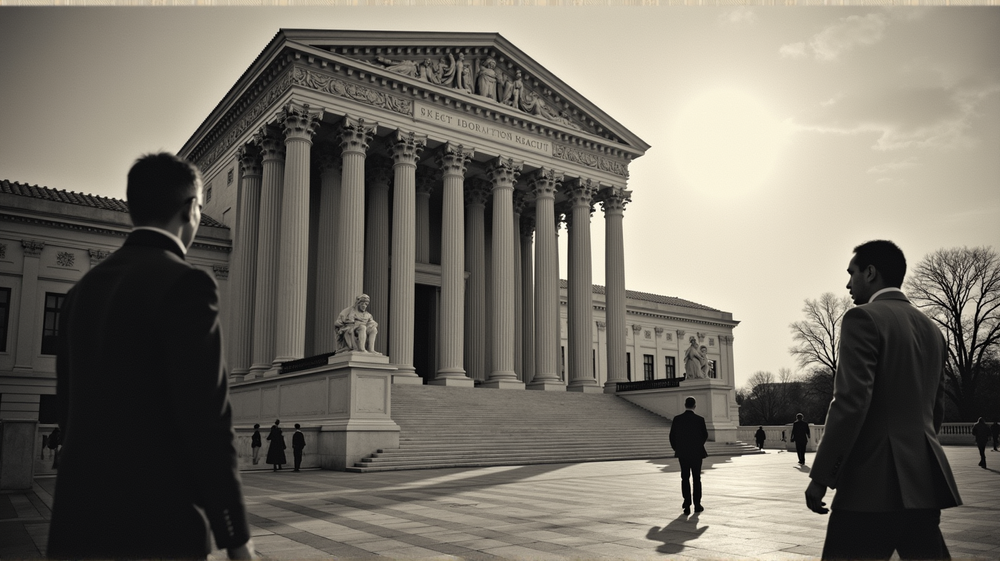
In a move that could redefine American citizenship rights, the Supreme Court has agreed to hear a pivotal challenge to birthright citizenship spurred by former President Donald Trump. This legal battle centers around Trump’s executive order aiming to revoke the automatic granting of citizenship to nearly everyone born on U.S. soil, as anchored in the 14th Amendment. The stage is set for a crucial judicial interpretation that might transform a centuries-old constitutional guarantee.
A Controversial Executive Order
Trump’s executive order emerged as a bold political maneuver in 2025, aiming to halt the practice of granting citizenship to children born in the U.S. to non-citizen parents, whether their presence was temporary or unauthorized. The 14th Amendment, which has historically provided this right, was originally enacted post-Civil War to ensure citizenship for emancipated slaves and their descendants.
The Constitutional Challenge
The legal discourse brings into focus the 14th Amendment’s citizenship clause, traditionally interpreted through the landmark 1898 Wong Kim Ark decision. This precedent affirmed birthright citizenship for children born on American soil, regardless of parental status. The challengers emphasize that Trump’s executive order conflicts not only with this decision but also with subsequent federal laws that codified birthright citizenship principles.
Legal Battles and Nationwide Injunctions
Trump’s directive has faced staunch opposition, resulting in multiple lawsuits. Federal courts in Seattle and Maryland have temporarily blocked its enforcement, spotlighting the contentious use of nationwide injunctions. The Supreme Court’s forthcoming review will not only assess the executive order itself but also the broader judicial authority to implement such far-reaching injunctions.
Historical Implications and Future Considerations
Historically, the citizenship clause of the 14th Amendment was intended to counteract the infamous Dred Scott v. Sandford decision, which denied citizenship rights to African-Americans. As stated in SCOTUSblog, the Supreme Court now finds itself revisiting this foundational amendment, pondering its application in a contemporary context.
A Legal Landmark in the Making
As oral arguments are slated for the coming spring, the Supreme Court’s decision will undoubtedly reverberate through the legal landscape, potentially reshaping the concept of American citizenship. The implications of this ruling extend far beyond individual cases, posing profound questions about national identity and constitutional interpretation in the modern era.