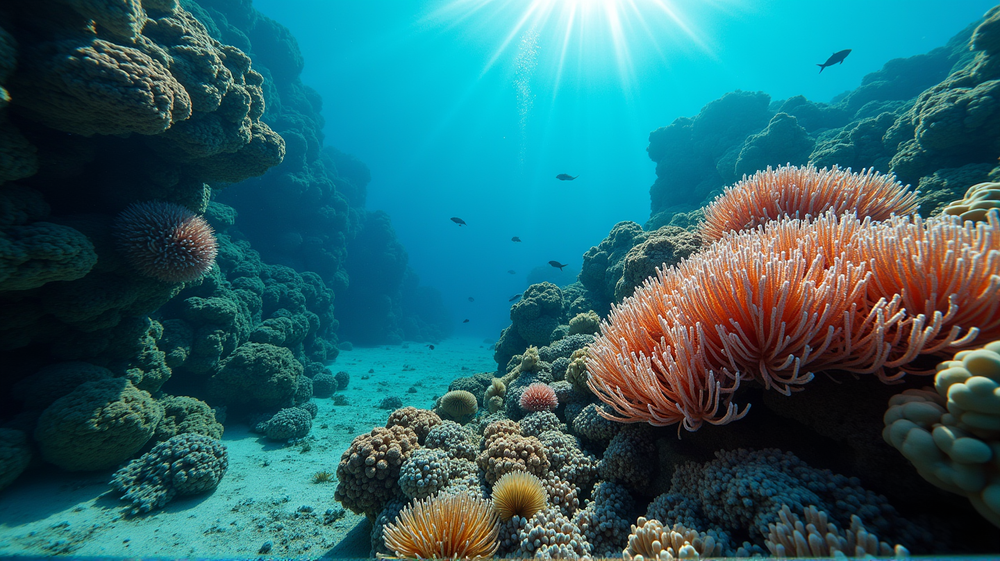
In an audacious marine rescue operation, scientists have embarked on a mission that could redefine coral conservation as we know it. Adorned with wetsuits and armed with determination, experts from the University of Miami, the Florida Aquarium, and Tela Marine in Honduras are arguably unlocking a pivotal milestone in the battleground of climate change. They are opting for an innovative synergy—crossbreeding corals from different regions to fight against rising ocean temperatures and coral bleaching that plagues Miami’s coastlines.
A Collaborative Coral Odyssey
Located in the heart of Key Biscayne, Fla., this project marks a historic transnational coalition. Guided by marine biologist Andrew Baker, the mission ventures to introduce a new genetic blend into local waters by merging coral spawn from the warmer tides of Honduras’ Tela reefs with those native to Florida. Baker emphasizes the importance of diversity by stating, “We’re providing much-needed external assistance to mitigate the global threat of climate change.”
The Rationale Behind the Tela Corals
Baker’s team found hope in Tela’s warm reef, noting its remarkable resilience in the face of higher temperature waters. By harvesting spawn from this bio-diverse region, they were able to produce coral offspring that potentially bear higher thermal tolerance. These tiny yet promising lifeforms represent a beacon of hope, contingent on the belief that diversity could fortify weakened ecosystems against impending climate-related challenges.
Planting with Purpose
The transplant process is meticulous. Concrete bases cradle these precious coral fragments upon Miami’s reefs, fostering a new chapter of potential restoration and preservation. By closely monitoring the newly set colonies, researchers will determine how these crossbred variants withstand environmental pressures compared to their purely Floridian counterparts, particularly over the daunting prospect of searing summer heat.
The Promise of Elkhorn Corals
Iconic to Florida, Elkhorn corals, vital in buffering coastlines against storms, face existential threats as a result of prolonged warming and coral bleaching. This initiative isn’t merely a rescue operation; it’s about creating a sustainable future where Elkhorn corals reclaim their crucial role in maintaining marine biodiversity and coastal protection.
A Model of International Conservation
The implications of this endeavor extend far beyond Florida’s shores. Juli Berwald of Tela Marine articulates the vision of cross-continental collaboration, remarking that combating the looming environmental crisis requires boundary-less teamwork. If these corals thrive, they offer a blueprint that can be modeled across the Caribbean waters, demonstrating that when borders disintegrate, potential for restoration flourishes exponentially.
This bold experiment isn’t merely about saving corals; it’s about orchestrating a symphony of survival, resilience, and renewal in our planet’s vast and intertwined marine ecosystem. According to WUSF, this initiative could spearhead a new era in coral conservation—one that offers hope, even as the oceans warm.